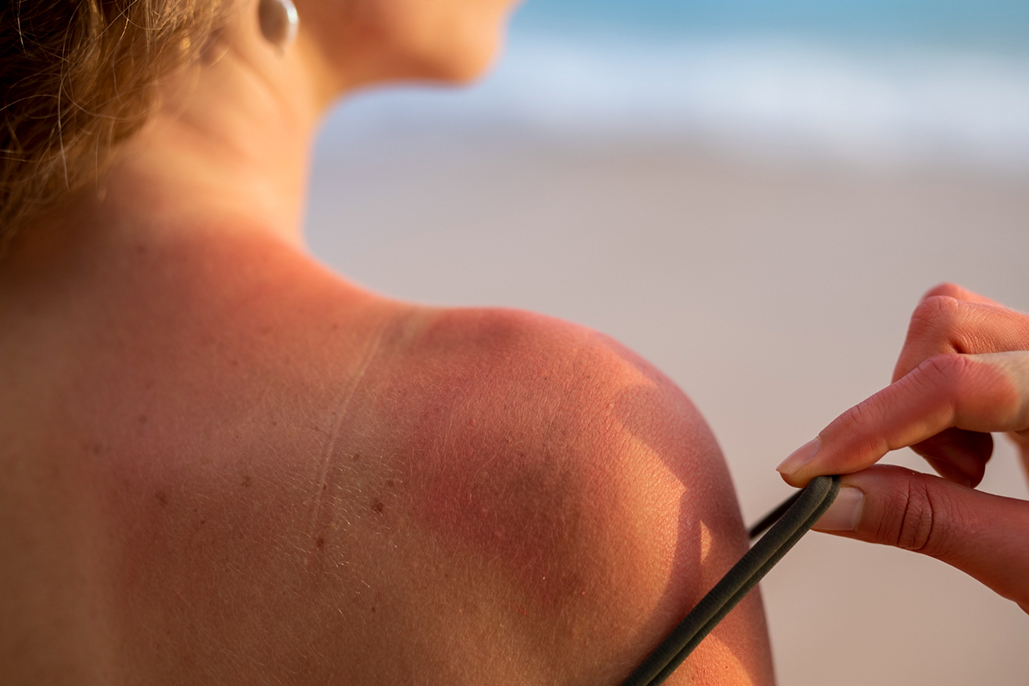
Sunlight brings us warmth, brightness, and many health benefits, such as stimulating vitamin D production, which is essential for healthy bones, immunity, and even improving mood. On the other hand, sunlight also carries invisible dangers—especially when our skin is overexposed to ultraviolet (UV) rays, leading to sunburn. While many people think of sunburn as a minor, temporary issue, in reality, it can be the starting point of long-term health problems, including serious conditions like skin cancer.
Sunlight contains different types of radiation, particularly ultraviolet rays (UV), which are classified as UVA, UVB, and UVC. Among these, UVC cannot pass through the Earth’s atmosphere. UVA penetrates deeply into the skin, causing premature aging, while UVB is the main culprit behind sunburn and significantly increases the risk of skin cancer with prolonged or frequent unprotected exposure. In a tropical country like Thailand, where the sun is intense almost all year round, protecting your skin is something you can’t afford to ignore.
The symptoms of sunburn usually begin with a burning sensation, redness, or peeling after prolonged exposure to strong sunlight—something many people experience after a beach trip or outdoor activities. While it may not seem severe, the accumulated cellular damage from UV radiation is invisible and can eventually lead to chronic skin problems or even melanoma, the most aggressive form of skin cancer that can spread quietly and rapidly.
According to Thailand’s National Cancer Institute, between 2016–2018, there were more than 4,300 new cases of skin cancer reported each year, which averages to about 12 people per day. Although this figure is lower compared to colder countries where fair-skinned people are more vulnerable, the numbers are steadily increasing every year. This trend highlights the growing importance of awareness and prevention.
Sunburn can happen to anyone, but certain groups are at higher risk. These include people with very fair or pale skin, who have less melanin to protect against UV radiation; those who work outdoors regularly such as farmers, laborers, or athletes; and travelers exposed to strong sun at beaches, high altitudes, or snowy areas where UV rays reflect back from surfaces like sand and snow. Children with delicate skin, people who skip or inconsistently use sunscreen, and those taking medications or topical products that increase photosensitivity are also more susceptible.
Preventing sunburn isn’t just about applying sunscreen—it starts with avoiding direct sunlight between 10 a.m. and 4 p.m. When that’s not possible, wear long-sleeved clothing, hats, sunglasses, and apply a suitable sunscreen daily, even when indoors or on cloudy days, since UV rays can pass through glass or reflect off surfaces. Regularly checking your skin for unusual changes, such as moles that change color, spots that grow quickly, or wounds that don’t heal, is also crucial—especially for those with frequent sunburns or a family history of skin cancer.
Your best ally is sunscreen. Choose one with at least SPF 30 to block UVB and PA+++ or broad-spectrum protection for UVA. If you sweat easily or enjoy outdoor activities, use a water-resistant formula. Remember to apply sunscreen 15–30 minutes before sun exposure, reapply every two hours, and immediately after swimming or heavy sweating. Don’t forget often-overlooked areas like the back of the ears, neck, hands, and feet.
If you do get sunburned, initial self-care can ease symptoms. Apply cool compresses, use soothing creams with aloe vera or calamine, drink plenty of water to help skin cells recover, and avoid scratching or further sun exposure. If the burn is severe—with blisters, fever, chills, nausea, or persistent pain and peeling—seek medical attention promptly. Sunburn is not a trivial matter; repeated burns and skin changes should never be ignored.
Although we can’t avoid sunlight completely, we can coexist with it safely if we know how to care for our skin. Protecting your skin from the sun isn’t just about beauty—it’s an investment in your long-term health, keeping your skin radiant, resilient, and lowering your risk of dangerous conditions like skin cancer in the future.